


What is a PID Detector? Uses, Applications & How to Choose One

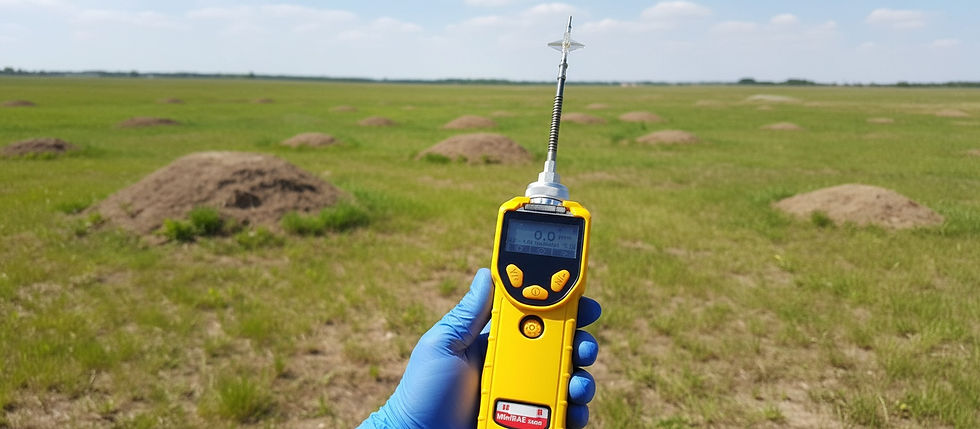
Volatile organic compounds (VOCs) are present in many industrial environments, from manufacturing plants and refineries to laboratories and hazardous waste sites. While some VOCs are harmless at low concentrations, others can pose serious health, safety, and environmental risks. Detecting these gases quickly and accurately is essential for protecting workers and ensuring compliance with Australian workplace safety regulations.
This is where a photoionisation detector (PID) becomes an invaluable tool. Designed to detect a wide range of VOCs at extremely low concentrations, PID detectors are widely used across industries where hazardous airborne chemicals may be present.
If you've ever wondered what is a PID detector, how it works, or whether it's the right choice for your application, this guide explains everything you need to know.
What Is a PID Detector?
A photoionisation detector (PID) is a portable gas detection instrument that identifies and measures volatile organic compounds (VOCs) and certain inorganic gases in the air. Unlike traditional gas detectors that target a single gas, a PID can detect hundreds of different VOCs using ultraviolet (UV) light.
Professional-grade solutions such as the MiniRAE 3000 VOC (PID) Detector provide highly sensitive monitoring capable of detecting VOCs from parts per billion (ppb) to parts per million (ppm), making them ideal for industrial hygiene, environmental monitoring, and emergency response.
How Does a Photoionisation Detector Work?
A photoionisation detector works by exposing air samples to ultraviolet (UV) light.
The process is straightforward:
Air enters the detector through a sampling pump.
A UV lamp emits high-energy photons.
VOC molecules absorb the UV energy.
The molecules become ionised.
The detector measures the electrical current produced by the ions.
The concentration of VOCs is displayed in real time.
Because only compounds with ionisation potentials lower than the UV lamp's energy are detected, PIDs are extremely selective for volatile organic compounds while remaining highly sensitive.
What Can a PID Detector Detect?
One of the biggest advantages of a photoionisation detector is its ability to detect a broad range of compounds.
Common detectable substances include:
Benzene
Toluene
Xylene
Acetone
Ethanol
Methanol
Formaldehyde
Styrene
Hexane
Industrial solvents
Petroleum vapours
Paint fumes
Adhesive vapours
Many professional users rely on the MiniRAE 3000 PID detector because it provides rapid detection of hundreds of VOCs with excellent sensitivity.
PID Detector Uses
Understanding PID detector uses helps determine whether this technology is suitable for your workplace.
Industrial Hygiene
Industrial hygienists use PID detectors to assess worker exposure to airborne VOCs during manufacturing, chemical processing, and maintenance activities.
Environmental Monitoring
Environmental consultants use photoionisation detectors to monitor:
Contaminated land
Groundwater remediation
Soil vapour investigations
Landfill gas
Air quality assessments
Emergency Response
Hazmat teams depend on PID detectors to quickly identify hazardous VOCs during:
Chemical spills
Fuel leaks
Fire investigations
Unknown chemical releases
Oil and Gas Industry
Petroleum facilities use PID detectors to monitor hydrocarbon vapours during maintenance, inspections, and confined space work.
Manufacturing
Manufacturers rely on PID technology to monitor solvent emissions from:
Paint shops
Printing facilities
Pharmaceutical production
Chemical manufacturing
Electronics assembly
Wastewater Treatment
Operators use photoionisation detectors to identify potentially harmful organic vapours before entering enclosed treatment facilities.
Common Applications of Photoionisation Detectors
A PID detector is commonly used in:
Confined space entry
VOC leak detection
Indoor air quality assessments
Chemical storage inspections
Industrial maintenance
Environmental site investigations
Occupational exposure monitoring
Emergency response
Laboratory safety
Waste management facilities
PID vs Gas Detector
One of the most common questions professionals ask is the difference between a PID detector and a conventional gas detector.
PID Detector | Traditional Gas Detector |
Detects hundreds of VOCs | Detects specific gases like methane, oxygen, carbon monoxide, or hydrogen sulphide |
Uses ultraviolet light | Uses catalytic, electrochemical, or infrared sensors |
Extremely sensitive to VOCs | Optimised for combustible or toxic gases |
Excellent for chemical exposure monitoring | Ideal for gas safety monitoring |
Detects compounds in ppb or ppm | Usually measures ppm or percentage LEL |
Rather than replacing a standard gas detector, a PID complements it. Many workplaces use both technologies together to obtain a complete picture of atmospheric hazards.
Advantages of Using a Photoionisation Detector
Modern PID detectors offer several benefits.
Rapid Detection
Real-time readings allow workers to identify hazardous conditions immediately.
High Sensitivity
Professional PID detectors detect VOCs at extremely low concentrations before they become dangerous.
Portable Design
Lightweight handheld instruments are ideal for field inspections and confined space work.
Broad VOC Detection
One detector can monitor hundreds of different organic compounds.
Improved Worker Safety
Early detection allows corrective action before harmful exposure occurs.
Regulatory Compliance
Using properly calibrated PID detectors helps organisations meet workplace health and environmental monitoring requirements.
How to Choose the Right PID Detector
Choosing the right detector depends on your application.
Measurement Range
Consider whether you require ppb-level sensitivity or higher ppm measurement ranges.
VOC Library
Choose a detector capable of detecting the chemicals commonly encountered in your industry.
Data Logging
Built-in data storage simplifies reporting and compliance documentation.
Battery Life
Long operating times reduce interruptions during fieldwork.
Pump Performance
Strong sampling pumps improve measurements in confined spaces and difficult environments.
Ease of Calibration
Regular calibration is essential for maintaining measurement accuracy.
Rugged Construction
Industrial environments require durable instruments capable of handling dust, moisture, and demanding field conditions.
For professionals requiring reliable VOC monitoring, the MiniRAE 3000 VOC (PID) Detector offers excellent sensitivity, advanced data logging, and robust field performance suitable for Australian industrial applications.
Best Practices for Using a PID Detector
To achieve accurate results:
Calibrate the detector regularly.
Inspect filters and sampling probes before use.
Keep the UV lamp clean.
Understand correction factors for different chemicals.
Follow manufacturer maintenance recommendations.
Train operators on proper instrument use.
Store the detector in a clean, dry environment.
Routine maintenance ensures consistent performance and extends the life of the instrument.
Why Professionals Choose PID Technology
Photoionisation detectors have become the preferred solution for VOC monitoring because they provide immediate results, detect extremely low concentrations, and support a wide variety of industrial applications.
Whether monitoring workplace exposure, investigating environmental contamination, or responding to chemical incidents, a PID detector delivers fast and reliable information that helps protect people, assets, and the environment.
Final Thoughts
Understanding what is a PID detector is the first step toward selecting the right gas detection technology for your workplace. While traditional gas detectors remain essential for monitoring combustible and toxic gases, photoionisation detectors provide unmatched sensitivity for detecting volatile organic compounds across countless industrial applications.
If your work involves hazardous chemicals, solvent vapours, environmental monitoring, or industrial hygiene, investing in a high-quality PID detector can significantly improve safety and compliance.
To explore a professional-grade solution, learn more about the MiniRAE 3000 VOC (PID) Detector from WAM Scientific and discover how advanced VOC detection can support safer and more efficient operations.


Comments